
 vn
vn en
en ja
ja ko
ko zh
zh



























List of relic sites (55)
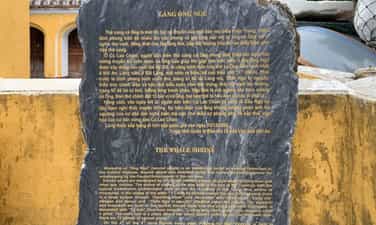
Tomb of Ong Ngu Cu Lao Cham
Tomb of Ong Ngu Cu Lao Cham Ong Ngu's mausoleum is located in Bai Lang village, Tan Hiep island commune (Cu Lao Cham), Da Nang city (formerly in Hoi An city, Quang Nam). The project was built in the late 19th century, located about 10 meters from the coast, with its back leaning against the mountain and facing the sea according to the traditional feng shui concept of coastal residents. According to folk beliefs, Ong fish (whale) is revered by fishermen as the god of the South Sea, always protecting and helping people in distress at sea. When the Ong fish washed ashore, people held a solemn funeral according to traditional rituals, then reburied and put the remains in the mausoleum to worship, showing gratitude to the fishermen's protective god. The mausoleum is built of bricks, lime and coral, with traditional architecture with yin and yang tiled roofs, low domed roofs and a post-mortar that holds the bones of Ong fish. The roof is decorated with motifs of four sacred animals, phoenix birds and tombstones. In front is a screen embossed with the image of "The Fish God plays the moon". Inside, there are three rooms: the main room worships the Ong fish with 13 gilded and lacquered tablets; The two side rooms worship the left, right, and supporting deities. Ong Ngu Mausoleum is not only a place of religious activities of the Cu Lao Cham fishing community but also a typical architectural work of art, reflecting the marine cultural life of local residents. Every year, on the 3rd and 4th day of the 4th lunar month, the Cau Ngu festival is held here with traditional rituals to commemorate the Ong fish, pray for favorable weather, calm seas and safe, bountiful voyages. With outstanding values of history, architecture and cultural beliefs, on December 13, 2006, Ong Ngu Tomb of Cu Lao Cham was ranked a national historical and cultural relic by the Ministry of Culture and Information (now the Ministry of Culture, Sports and Tourism). Source: Cu Lao Cham Marine Protected Area Management Board
Da Nang
8 view
Rating : National monument
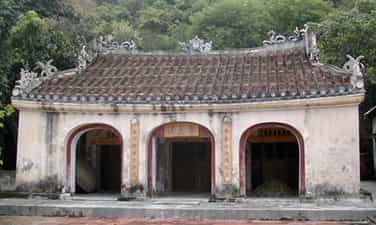
Tan Hiep Tien Thanh Communal House
Tan Hiep Tien Hiep Communal House - A relic marking the merit of establishing the village on Cu Lao Cham Tan Hiep Tien Hien Communal House (local people often call Tien Hiep Mausoleum) is located in Bai Lang village, Tan Hiep commune (Cu Lao Cham), Hoi An city, Quang Nam province. This is a typical religious structure of the island's residents, built around the end of the 18th century to worship the ancestors and descendants who had meritorious efforts to destroy and establish villages, and at the same time worship the gods protecting fishermen in their lives and making a living at sea. According to historical documents, Cu Lao Cham has long held an important position at the sea gateway of Hoi An, where domestic and foreign ships often stop to get fresh water, firewood and shelter from the wind before continuing their voyage. The formation of the island community is associated with the process of reclamation, hamlet establishment and marine industry development. Therefore, building a communal house to commemorate ancestors as well as pray for a calm sea is a cultural beauty that has been passed down through many generations. The communal house was built in a typical arched architectural style, using local materials such as stone, brick, coral, lime mortar; The roof is covered with yin and yang tiles. The roof is decorated with the shape of "two dragons painting pearls", the blade's head is softly curved with floral motifs, dragon faces and fish tails, reflecting the interference between traditional architectural art and island culture. The space inside is spacious, divided into many worship areas. The main space has tablets worshiping Phuc Ba General and a number of gods related to the marine industry. According to ancient beliefs, "Phuc Ba" is a title given to generals who have conquered waves or are talented at navigation, and are worshiped by people as gods protecting fishermen on every trip to sea. With unique historical, cultural and architectural values, Tan Hiep Tien Hien Communal House was ranked a National Monument in 2006. Source: Hoi An Cultural Heritage Management and Conservation Center.
Da Nang
46 view
Rating : National monument
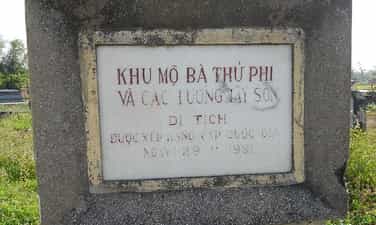
The tomb of King Quang Trung's concubine and Tay Son generals
The tomb of King Quang Trung's concubine and Tay Son generals The tomb of King Quang Trung's concubine and Tay Son generals is located in Thanh Dong village, Cam Thanh commune, Hoi An city, Quang Nam province. The relic is located on Rung Ray mound, where concubine Tran Thi Quy and a number of generals and mandarins of the Tay Son dynasty of the Tran Thanh Chau clan are buried. According to the Tran family genealogy and local documents, Tran Thi Quy was from Thanh Chau village and was recruited by King Quang Trung to be his concubine. After the Tay Son dynasty collapsed, she returned to her hometown to live and was buried in Cam Thanh. In the tomb area there are also the tombs of Tran Cong Thuc - Grand Admiral, Grand General and many other members of the Tran clan who held positions under the Tay Son dynasty. The tomb area not only reflects the typical ancient tomb type of Hoi An but also demonstrates the role of Thanh Chau village and the Tran clan in the Tay Son movement. This is a valuable source of information for researching local history and the late 18th century. In 1991, the tomb of King Quang Trung's concubine and Tay Son generals was ranked as a national historical relic. Source: According to Hoi An Cultural Heritage Management and Conservation Center.
Da Nang
23 view
Rating : National monument
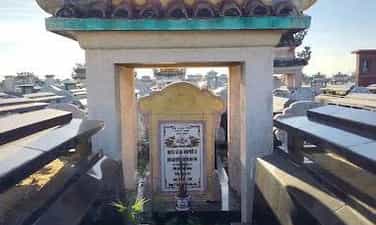
Le clan's tomb
Le clan's tomb - A relic marking the process of colonizing the land of Cam Thanh The Le clan's tomb is located in Thanh Dong village, Cam Thanh commune, Hoi An city, Quang Nam province. This is the burial relic of the ancestor of the Le clan - Mr. Le Duy Tri, a fifth-generation descendant of the Later Le dynasty, who came to Thanh Chau to settle down in the early 17th century. According to historical documents, Mr. Le Duy Tri is the eldest son of The Tong Emperor Le Duy Dam, brother of King Kinh Tong Le Duy Tan. In 1623, due to political upheaval and persecution by Lord Trinh Tung, he and his family went to the South, stopping in the Thanh Chau area (now in Cam Thanh commune). Here, he and his clan reclaimed land, established hamlets, developed production and became the sages who publicly reclaimed this land. The current tomb complex was built on a large scale in 1930 (the fifth year of Bao Dai). The tombstone is engraved with the names of the ancestors of the Le clan and recognizes their contributions to the exploration of ancient Thanh Chau lands. The monument is not only a place to commemorate ancestors but also an important testament to the process of migration and expansion of Dai Viet residents into Hoi An in the 17th century. With outstanding historical and cultural values, the Le ancestral tomb is a valuable source of material for researching the history of the formation of the Cam Thanh community in particular and Hoi An in general. The relic was ranked as a national historical relic in 1991. Source: According to Hoi An Cultural Heritage Management and Conservation Center.
Da Nang
55 view
Rating : National monument
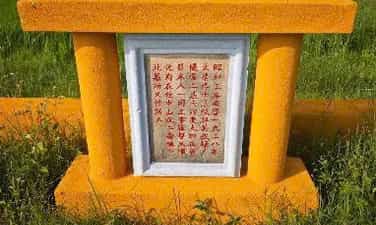
Tomb of Japanese merchant Tani Yajirobei
The grave of Japanese merchant Tani Yajirobei located in Hoi An Dong, Da Nang City, is a testament to the trade relationship between Vietnam and Japan during the period when Hoi An was a busy international trading port in the late 16th and early 17th centuries. Mr. Tani Yajirobei, from Hirado (near Nagasaki), came to Hoi An to trade, settled and passed away here. The tombstone was established in 1647, clearly stating Japan's hometown, and is a precious document about the presence of the Japanese community in Hoi An. The tomb was built in the style of ancient Hoi An tombs with tombs made of traditional compounds from lime, seashells, mussel shells, molasses and Litsea sap to create high durability over hundreds of years. This is one of the valuable historical, cultural and architectural relics, contributing to demonstrating the economic and cultural exchange between Vietnam and Japan in history. The tomb was built on a high mound, facing Northeast according to traditional feng shui concepts. The work includes sandstone walls, saddle-shaped graves and sandstone tombstones. In 1991, the Tomb of Japanese trader Tani Yajirobei was ranked as a National Historical Site. Today, the relic is an attractive tourist destination, especially for Japanese tourists and those who love learning about the history of Hoi An trading port. Source: Hoi An Ancient Town
Da Nang
209 view
Rating : National monument
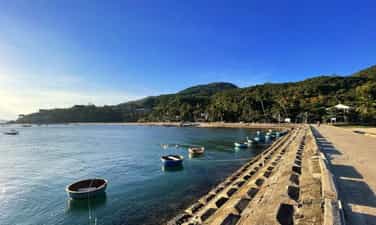
Temple of the Nest Craft Patriarch of Cu Lao Cham
Located in Bai Huong village, Tan Hiep commune, Cu Lao Cham (Da Nang city), the Nest Temple (Yen Nghe To Mieu) is a unique religious relic, associated with the history of formation and development of Thanh Chau bird's nest exploitation profession - a traditional profession with a history dating back to the 16th century. Not only is it a place to worship the ancestors who pioneered the bird's nest profession, the monument also reflects the strong bond between island residents and the natural resources and sovereignty of Vietnam's islands and islands. The temple was built on a large scale in 1848 (the first year of Tu Duc) by Mr. Ho Van Hoa and Thanh Chau village officials to worship the ancestors of the bird's nest exploitation profession and the gods protecting the profession. According to many historical documents, from Gia Long's reign, Mr. Ho Van Hoa was assigned to manage the exploitation of bird's nests on Cu Lao Cham and was honored by later generations as the Patriarch of the bird's nest profession. The monument was built on a sand mound about 150 meters from Bai Huong beach, with the front facing the sea. The architecture has a traditional style with three-entrance gates, scroll-style screens, two consecutive houses with yin-yang tiles and a system of exquisitely carved wooden rafters. The worship space holds many precious artifacts such as horizontal panels, gilded altars, tablets of ancestors and stone stele of the Tu Duc period, reflecting the historical, artistic and religious values of the coastal community. Coming to the Shrine of the Nest Craft, visitors will not only learn about the history of bird's nest exploitation - a famous traditional profession of Cu Lao Cham, but also have the opportunity to explore the cultural life of Bai Huong fishermen, listen to stories and legends about the bird's nest profession and feel the connection between people and the sea and islands over many generations. Every year, on the 10th day of the 3rd lunar month, the Nest Ceremony is solemnly held at the relic to commemorate the contributions of predecessors and pray for a favorable, peaceful and bountiful harvest season. Today, the festival is also combined with many cultural and tourist activities, contributing to promoting the Thanh Chau bird's nest exploitation profession - a national intangible cultural heritage, while raising awareness of preserving natural resources and promoting the value of the Cu Lao Cham - Hoi An World Biosphere Reserve. According to new newspaper
Da Nang
324 view
Rating : National monument
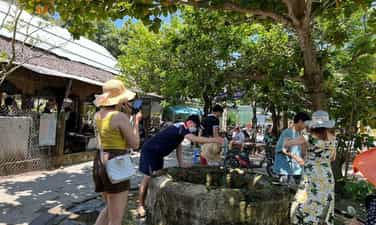
Ancient well of Xom Cam
Xom Cam ancient well - A mark of Cham culture in the heart of Cu Lao Cham Located in Cam village, Hoi An, Da Nang, Xom Cam ancient well is one of the typical ancient architectural works of Cu Lao Cham, associated with the history of formation and development of the island's residents for many centuries. This is not only a valuable source of fresh water but also a vivid testament to the cultural interference between the Cham and Vietnamese people on the Hoi An international trade port route. Archaeological results show that Cu Lao Cham was inhabited more than 3,000 years ago. By the 7th - 10th centuries, this place became the residence of the Cham people, as well as an important stop on the international maritime route, where vibrant trade activities took place with traders from China, the Middle East and many other countries. After the 17th century, the Vietnamese community came to live and continued to inherit, preserve and use the works built by the Cham people, including the ancient well system. Xom Cam Well has a bold Cham architectural style with a well mouth of about 1.18 m in diameter, 4.5 m deep, the well's bottom is built of bricks in the form of a "collar", bonded with traditional lime mortar. In particular, at the bottom of the well is a system of four ironwood bars assembled into a square shape, contributing to reinforcing the foundation and ensuring the sustainability of the project over hundreds of years. According to many ancient documents, during the prosperous period of Hoi An trading port, international merchant ships often visited Cu Lao Cham to replenish food and get fresh water from ancient wells on the island before continuing their journey. To this day, the Forbidden Hamlet Well is still full of water, clear and cool all year round, continuing to serve the daily life of local people, becoming a symbol of longevity and enduring vitality in the middle of the sea. Not only has historical and architectural value, Xom Cam Ancient Well also reflects the process of inheritance and cultural blending between communities on the island, contributing to the unique identity of the World Biosphere Reserve of Cu Lao Cham - Hoi An. With special historical, archaeological and cultural values, Xom Cam Ancient Well was ranked as a national historical relic by the Ministry of Culture, Sports and Tourism in 2006. Today, this is an attractive tourist destination, where visitors can learn about the long history of Cu Lao Cham, explore the traces of Champa civilization and feel the peaceful beauty of the island in the middle of the East Sea. According to Hoi An Ancient Town
Da Nang
704 view
Rating : National monument
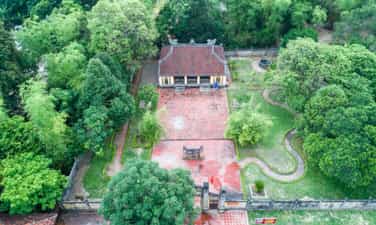
Ong Ich Duong memorial relic
The Ong Ich Duong memorial relic is associated with the life and sacrifice of Ong Ich Duong (1890–1908), a son of Phong Le village, now in Hoa Tho Tay ward, Da Nang city. He is the grandson of Mr. Ich Khiem and was born into a family with a patriotic tradition. He was soon famous for being chivalrous, good at literature and martial arts, and always on the side of the poor people. In 1908, responding to the anti-tax collection movement in Central Vietnam, Mr. Ich Duong led the people of Hoa Vang to participate in the fight against oppression. After the uprising failed, he was captured by the French colonialists and beheaded at Tuy Loan market when he was only 18 years old. Before his death, his courageous spirit and indomitable spirit became a symbol of patriotism and the will to fight for national independence. Mr. Ich Duong's sacrifice deeply moved the local people. People built a shrine right at the place where he died to commemorate the merits and spirit of this patriotic scholar. Over time, the relic area continues to be preserved and embellished with a memorial stele next to the historic banyan tree - a witness associated with the 1908 event. Today, Ong Ich Duong Memorial Monument is a red address that educates patriotic traditions and the spirit of revolutionary struggle for generations, and is also a destination to help tourists learn about the anti-tax collection movement in Central Vietnam and the history of the struggle of Da Nang people in the early twentieth century. According to: Da Nang Newspaper
Da Nang
637 view
Rating : National monument
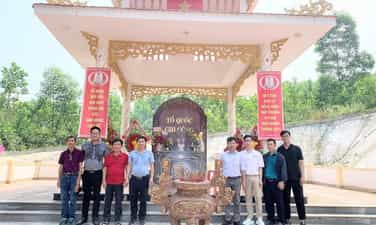
Revolutionary base area of Hoa Vang District Party Committee
Hoa Vang District Party Committee's revolutionary base is located in the triangle area of Phu Tuc - O Ray - Tong Coi mountains, in Hoa Vang ward. With rugged mountainous terrain, this place was once an important base for revolutionary forces in the two resistance wars against the French colonialists and the American imperialists. From the years 1947–1949, the Dong Xanh - Dong Nghe area was chosen as the location for the leadership of the Hoa Vang District Party Committee. By 1955, the Quang Da Provincial Party Committee built the Hoa Vang West wing revolutionary base (codename B1), turning this place into the center for directing the revolutionary movement of the western and northwestern regions. During this time, Da Nang Stone and Non Nuoc Stone became sacred symbols of patriotism and the will to fight resiliently. Since 1960, the triangle area of Phu Tuc - O Ray - Tong Coi continued to be chosen as the resistance base of the Hoa Vang District Party Committee. This is the workplace, direction and activity of many district leaders, and is also the venue for conferences, Party congresses, military and political training for revolutionary forces during the years of resistance against the US. The rugged mountainous terrain has contributed to shielding and protecting the headquarters against many enemy raids. During the two resistance wars, Hoa Vang District Party Committee Revolutionary Base played the role of an important leadership, command and rear base of the local revolutionary movement, associated with many historical events and activities of leading officials at the provincial, regional and district levels. To preserve those historical values, the relic site has been invested in building exhibition houses, memorial stele and other items for sightseeing. Today, this place has become a red address for educating patriotic traditions, commemorating previous generations of revolutionaries and a destination to help tourists learn about the history of the heroic struggle of Hoa Vang's army and people in the cause of national liberation. According to: Da Nang Newspaper
Da Nang
248 view
Rating : National monument
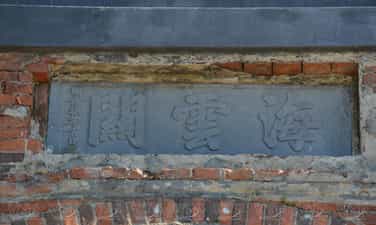
Hai Van Quan
Hai Van Quan is a defensive military project built in 1826, during the reign of King Minh Mang. The relic is located on top of Hai Van Pass at an altitude of about 496 m above sea level, at the border between Hue city and Da Nang city. This is a strategic location on the North - South traffic route, and is also the gateway to protect the capital Hue from the south. Since the time of the Nguyen Lords, Hai Van Pass has been considered a dangerous land, playing an important military and defensive role. When the Nguyen Dynasty chose Hue as its capital, this place was considered the "throat" of the country. Therefore, King Minh Mang built Hai Van Quan to control the Thien Ly road and strengthen the protection of the capital. The project includes two large city gates built of brick and stone in a rolling arch architecture. The gate facing Da Nang is engraved with three words "Hai Van Pass", while the gate facing Hue is engraved with six words "The most majestic pass in the world" - a praise for the majestic beauty and critical position of Hai Van Pass. Surrounding the gate is a solid wall system with military items such as garrisons, weapons warehouses and observation positions. Through many historical upheavals, especially during the French colonial period and the war, Hai Van Quan was converted into a military base, many original architectural items were destroyed or degraded. By 2017, the monument was ranked as a National Monument, and from 2021, Hue and Da Nang have coordinated to implement a restoration project, restoring important items, contributing to restoring the original appearance of the building. Today, Hai Van Quan is not only a historical relic of special value but also a famous stop on the Hai Van pass road. From here, visitors can enjoy a panoramic view of the mountains, the sea and one of the most beautiful coastal roads in Vietnam. With unique historical, architectural and landscape values, Hai Van Quan is a destination not to be missed in the journey to explore the Central region. According to: Vietnam News Agency
Da Nang
699 view
Rating : National monument
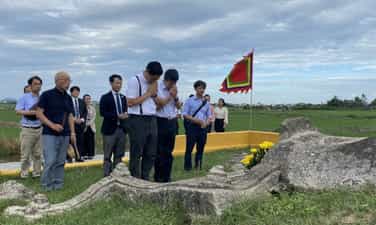
Tomb of Mr. Banjiro - Japanese businessman
Tomb of Mr. Banjiro - Japanese businessman - Truong Le Block - Cam Ha Commune Mr. Banjiro was a Japanese businessman who died in Hoi An. The tomb is near the road from the old town down to An Bang beach and still retains the original traces of construction from the 17th century. The tombstone is dated 1665. Behind the tomb there is a cement stele engraved with Japanese characters, with the following content: "In the 3rd year of Showa (1928) at the suggestion of literature professor Kuroita Katsumi, a group of Japanese residing in Indochina (now Vietnam, Cambodia, Laos) asked Mr. Nakayama to supervise the repair of this tomb." Recently, Hoi An has continued to renovate and carefully preserve this tomb. The monument was ranked as a national monument in 1991. Mr. Banjiro's grave was built with a mixture of lime, sand, bark water, molasses... The grave is saddle-shaped, facing Northeast, measuring 190cm x 85cm. In front of the grave there is a stele made of rock salt, with two lines of words on both sides. Previously, this tomb had no one to look after or repair it. After the Ministry of Culture issued a decision to recognize Hoi An Ancient Town, this tomb site is regularly cared for by the Hoi An Monuments Management Board to preserve and repair. Currently, the tomb is regularly looked after by Mr. Nguyen Nuoc's family and burned incense. The relic contributes to clarifying the process of forming Hoi An Ancient Town, especially the period when Japanese traders came to Hoi An to trade. Source: Hoi An Ancient Town
Da Nang
225 view
Rating : National monument
Quang Da Special Zone Party Committee relic site
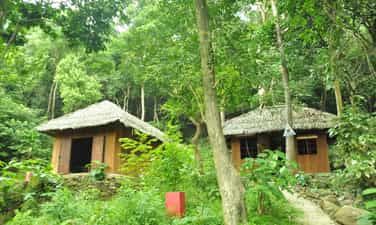
Quang Da Special Zone Party Committee relic site Hon Tau is a mountain range bordering Duy Xuyen, Nong Son and Que Son. With a strategic location, this place was chosen by the Quang Da Special Region Party Committee as a revolutionary base during the last 8 years of the war against the US (1967-1975). With the determination "Everything for the general attack, everything for the general uprising in the Spring of Mau Than 1968", the Quang Da Special Region Party Committee advocated centralized direction and mobilization of all forces to prepare for the uprising. Hon Tau base is where our officials and people suffered many sacrifices and losses. Many comrades were leaders of the Special Zone Party Committee and hundreds of officers and soldiers who heroically sacrificed their lives. In particular, 10 officers and employees of the Propaganda Department died when their living and working places were destroyed by American B52 bombs on the morning of May 22, 1972. Despite many sacrifices and losses, officers and soldiers of the Quang Da Special Region Party Committee still steadfastly continued to direct strategic attacks, decided on many important policies, and closely contracted with the main forces to liberate the western districts of Quang Nam province, creating a pincer position, contributing to completing the campaign to liberate Da Nang in 1975. In 2012, Hon Tau relic was ranked a national historical relic by the Ministry of Culture, Sports and Tourism. After the decision to classify the monument, the Department of Culture, Sports and Tourism of Quang Nam province prepared a dossier to submit to the Ministry of Culture, Sports and Tourism for approval and implemented a project to restore the monument. After more than 2 years of implementation, up to now, the Quang Da Special Zone Party Committee Relic Area has been basically completed on the occasion of the 50th anniversary of the establishment of the Special Zone Party Committee (October 1967 - October 2017). Source: Government Newspaper
Da Nang
320 view
Rating : National monument

The venue for the struggle for the cup in 1954
The "Venue of the Coc Coc Coca struggle in 1954" is the place to mark an important historical event recorded in the history books about the struggle of our compatriots demanding the implementation of the Geneva Agreement in Quang Nam. On the morning of September 27, in Tien Tho commune, Tien Phuoc district, Quang Nam province, a ceremony to receive with a national historical monument "The venue for the Coc Coc struggle in 1954" and commemorate the 65th anniversary of the Coc Coc struggle (September 29, 1954 - September 29, 2019). The relic "The venue for a tree struggle in 1954" is the place to mark an important historical event recorded in the history books about the struggle of our compatriots demanding the implementation of the Geneva Agreement in Quang Nam. According to the record, 9am on September 29, 1954, people from Que Son, Tam Ky, Quang Ngai went to Cay Coc market (Tien Tho commune, Tien Phuoc district) to trade. When they heard that the enemy was arrested and suppressed the people and revolutionary officials, they gathered and empty called for people around Cay Coc market to go to the struggle. Until about 10 o'clock on the same day, when he arrived at the lime bridge, 3 destroyers of the French army pants in the sky, the enemy issued an order to suppress, then the soldiers of the 601 battalion opened fire at the people, ... causing more than 330 compatriots and soldiers to fall. The recognition of the "venue for the struggle for the cup in 1954" is a national historical monument in addition to becoming a revolutionary traditional education place for the younger generation who is also a place to connect tourism and historical culture of Quang Nam province. Source of electronic portal of Tien Phuoc district, Quang Nam province.
Da Nang
4747 view
Rating : National relics.

The location of the anti -tax movement in 1908 in the Central region
High anti -collection movement, heavy taxes in Quang Nam and central provinces have spent more than a century but the historical values that the movement brings are still intact to this day .... "Great Loc people" ... In 1858, the French colonialists exploded the first gun to the Danang seaport for the beginning of the invasion of our country. Patriotic movements continuously broke out everywhere but eventually failed. In 1897, the French colonialists conducted the first "colonial exploitation" policy with reactionary and conservative colonial policies, exploiting our people very badly and cruelly, especially tax collection policies. People not only have to pay taxes but also have to go to the wealthy, labor, road ... so many people died, so many people who were injured all their lives .. those mourning images went into the folk song: From the western day, the western door Digging the Cu River, the golden Dai Loc district is one of the localities of Quang Nam province that the people suffered from the brutal policy of feudal colonialists. Hungry, disaster, plus natural disasters, constant drought drowned the lives of farmers to the end of suffering. The district's name at that time took advantage of the policy of increasing taxes to declare the population to gain benefits for individuals. Facing that situation, at the beginning of March 1908, at a death anniversary of Chieu Ai village, Dai Nghia commune; A number of trenches have discussed each other to make signatures of the chiefs of the villages in the district to send to the district to mitigate the collection and tax dishes by the oversized people before the current policy of collection and tax policies; If not, they will be sent to the French porcelain court in Hoi An. Because the employment comes from the people's trade, because of the legitimate rights of the majority of the people, those who "apply for signatures", are called by the people in the district as "people" and the "collection" initiated by them is called "Copper Copper" or "Great Loc people". On 11-3-1908, more than 400 people dressed in ragged and pulled down the road, but the district tri did not dare to accept the application, issued a report to the provincial official and the French public official, so the protesting delegation pulled each other to surround the governor's palace and surrounded the porcelain court. The people of districts such as Dien Ban, Duy Xuyen, Tam Ky, Hoi An, Hoa Vang ... also simultaneously responded to their localities, and also pulled to Hoi An, so the number of protesters here was a crowded time. Under the pressure of the masses, the feudal colonial government had suppressed, arresting some leaders of the exile to prisons or trying. The movement to fight against high collection and heavy taxes after a while was also suppressed by the colonial and feudal government. However, the movement received the response and participation of a large number of people because this was a movement for the legitimate rights of the poor people against the exploitation of the rotten ruler at that time. The anti -tax movement in 1908 also showed the patriotism, spirit, and solidarity of the people. Stemming from the hatred of the invaders, the feudal feudalists sold the country, under the leadership of patriotic scholars, the farmers "torn the hat" had struggle. At first, the movement only started in a district, then quickly spread to districts and covers in Quang Nam province and central provinces. Patriotism, the solidarity of our people from the past to present is also the immutable value, making an important contribution to the success of the process of building and defending the homeland and the country. The anti -tax movement has blamed a strong feudal government apparatus. In Quang Nam and the central provinces, the people rebelled to break the cell, burn torture tools, and liberate prisoners; A series of wicked henchmen were surrounded by the masses, there were evil people who were punished properly. Wherever the people's uprising have the "guidance" of Confucian students, the Si, who had a certain social awareness at that time. Although the movement failed, it brought a new light to the Vietnamese revolutionary path. The farmer class is the core force for the later revolutionary movements. Facing the power by the whip, the guns of the enemy, the peaceful claims will not bring results; Only revolutionary violence is enough to fight against anti -revolutionary violence. The movement has been commented as "an extremely skillful prepared revolution". 110 years have passed, the anti -tax movement that day is just the first step for the revolutionary movements to boil later. But the existing value that we still have to affirm is the power of the people. On that day, before the movement of patriotic Confucianists, the masses of people "rice packed" took turns to struggle to reduce tax collection and reduction. Thousands of people split up each sip of water, each handful of rice, care, encourage the injured ... They united, mutually support each other, without self -interest, not calculated for themselves. They do everything with the sole purpose of fighting the brutal dominance of the feudal colonial government; reclaim the legal and legitimate rights for laborers suffering. The anti -tax movement in Quang Nam and the central provinces has entered the history of our nation's struggle as a shining milestone. Recognize the great historical values of the anti -tax movement; On December 29, 2017, Minister of Culture, Sports and Tourism issued Decision No. 5400/Decision -The Culture and Sports Culture and Tourism on the ranking of historical sites of the location to start the anti -collection and tax movement in 1908 in the Central region (Dinh Ai and Mr. Nghe Tiep's house), Dai Nghia commune, Dai Loc district, Quang Nam province are national relics.
Da Nang
4664 view
Rating : National relics.

The tomb of the upper house Truong Cong Hy
Thuong Thu Truong Cong Hy (1727 - 1800) is a member of Thanh Quyt village of Dien Ban government, now belonging to Dien Thang Trung commune, Dien Ban district. Specifically is a special historical figure, affirmed by the History Institute (under the Vietnam Academy of Social Sciences), "is the name of the Tay Son dynasty that our own history is still missed", so the name and career for the development of national history should be honored worthy. Truong Cong Hy Do Huong Cong under Vo Vuong Nguyen Phuc Khoat, a teacher of the Lord Nguyen Phuc Duong as well as the princes and Hoang Ton in the Lord. Recognizing the rotting of the item at that time, when the Tay Son dynasty was gentle, treated, waved the righteous flag, he followed to serve the Tay Son dynasty and was appointed as Tri Dien Ban government, then Kham Sai Quang Nam town, the image of the upper letter. Back to his hometown to retire, he was ordained a superior infantry and lobby Thuy An. During his lifetime, Thuong Thu Truong Cong Hy was a god who was always wholeheartedly for the people, for the country, famous Thanh Liem. During the time of Dien Ban's government, he devoted his heart to rectifying the government and commune levels; Organize the desert, promote production, expand school, recommend talented, wholeheartedly take care of people's lives. Loc Loc Dien, 500 acres of fields in Lai Nghi, Phu Chiem (Dien Phuong commune), when retired, he distributed to the local people to cultivate. When he died, people all over the place of visits were crowded. The village must set up "Hau Chain" (ie the guest house) for the people to stay before visiting. The road from "chain" to the Truong Tru church is still called by the people as the upper lane. Throughout his life, Thuong Thuong Truong Cong Hy has made great contributions to the rectification of the organization of the Department of Science and Faculty, compiling laws, recommending talented people ... In 2005, the tomb of the upper house Truong Cong Hy was recognized by the provincial People's Committee as a cultural and cultural relic of the province and in August 2013, the Ministry of Culture, Sports & Tourism issued a decision to recognize the historical monument and rank the national monument. Source of electronic portal of Dien Ban town, Quang Nam province.
Da Nang
4805 view
Rating : National relics.
Dinh Chien Dan
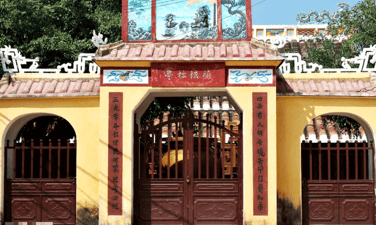
Chien Dan is one of the most ancient communal architectural works in Quang Nam. Currently, the communal house is located in Dan Trung village, Tam Dan commune, Phu Ninh district, less than 1km from National Highway 1A. According to historical documents, the old fried land of Ha Dong district, sublimated. In order to commemorate the merits of the ancestors, the gentle, Hau Hien has publicly painted the jelly to set up the flock; People in the village, in the commune at that time, together built the flock of the flock with a superficial scale and named the "communal house" in a high, flat area. The main communal house is built in the most shaped shape, the face turned to the southeast, the roof of the yin and yang tile roof, the two ends of the roof decorated with sophisticated patterns with the image of "Mesopotamia", the porch covered with two unicorns . The entire campus of the communal house is 1,500m², the main house is 500m² wide, with enough room for over 100 people. The communal house consists of 5 spaces, 2 wings with 30 jackfruit wood columns bigger than an adult bracelet, 3 compartments between used as a place of worship. The main face is a row of 6 columns separated from the temple according to the layout of the three chims. The beams above the top of the three spaces (through the upper hip connecting the two sets of trusses). In the communal house, the lawsuit was exquisitely carved and flexible by the artisans of Moc Van Ha village, Tam Thanh commune, Phu Ninh district. A wooden column is restored. Since construction up to now, the communal house has undergone many remodeling, most recently in 1996 and 2006 but the original elements of the communal house have been preserved intact of an ancient architectural work. According to the legend and the narrative of the elderly people living near the Chien Dan communal house, when King Le Thanh Tong went to conquer, the Southern Binh Dinh, the king used the flock to rest and make suitable decisions To win. Chien Chien Dan is ranked as a national architectural and artistic monument (Decision No. 39/2002/Decision -The Culture and Culture of December 30, 2002 of the Ministry of Culture and Information). Calendar, people open the communal house to commemorate their father's gratitude. Source of Quang Nam Electronic Information Portal.
Da Nang
5102 view
Rating : National relics.

Historical relics "The struggle of Ha Lam - Market"
The monument is about 300m from the market and opposite to Binh Trieu commune health station. Ha Lam - Market struggle takes place from September 4 to September 7, 1954 - is a political struggle to show the spirit of love and justice of the people of Thang Binh in particular, Quang Nam In general, against the American-Diem, brutally, the plot violates the Geneva Agreement to long-term division of our country. The beginning of the struggle took place at Bau Bang Bridge with only a few dozen participants but then quickly pushed up to the climax with thousands of people participating in the struggle at the market. This struggle killed 43 people and 23 injured. However, the struggle has shown the noble patriotism, the will, not afraid of the people's sacrifice, resolutely struggling to demand that the enemy must comply with the implementation of the Geneva Agreement; determination to protect the independence, freedom and democracy of the country ...; Forcing the enemy to falter, to accept the people's claims. In order to record the crimes of the US-Diem and commemorate those who have fallen, the memorial has an area of 8,988m2, with a fence of the gate gate, which is quite solid, located in Village 3, Binh Trieu Commune, District, Thang Binh, Quang Nam province. The monument is built about 5m high, showing three people standing back together, including: an old man holding a stick in his hand, a girl holding a conical hat and a young man who is holding a child. The baby is motionless in hand. Behind the monument are two reliefs with embossed cement, describing the struggle process of the people of Ha Lam - the market in the struggle on September 4, 1954. Between two reliefs is the altar, the side In the altar there are the words "Fatherland record". Historical relics "The struggle for Ha Lam - Market" was recognized by the People's Committee of Quang Nam province under Decision No. 4267/Decision of the People's Committee, on November 21, 2005. In 2014, the Ministry of Culture and Tourism officially ranked national historical monuments. Source of electronic portal of Thang Binh district, Quang Nam province.
Da Nang
4819 view
Rating : National relics.
Location of Bodhi victory.
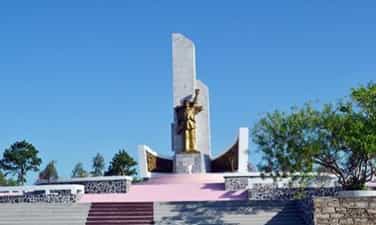
Bodhi base located in the mountains of Dat Son, in Dien Tien commune, Dien Ban district is a low hill area of about 215 hectares, with a height of 55 meters. Dat Son mountain has 5 high points: Sung Cong, Giong Ngang, Giong Lac, Bo and Land Ky. This is a strategic area, controlling an entire area from Tay Dien Ban to Hoa Vang and part of the east of Dai Loc district. Therefore, after bringing troops back to occupy our country, the French brought a company to occupy Bo Bo and turn this place into a firm base in the remote defense system to protect Da Nang base. In the winter -spring war 1953-1954, before the attacking attacks, the military politics of the army and the people of Quang Nam - Da Nang, the enemy completely fell into isolation. Many enemy posts are only a few dozen kilometers from Da Nang to the south to supply by plane, the puppet apparatus disintegrated in many places. In order to save the situation, the French expeditionary command in the Central region mobilized a mobile force from the Central Highlands battlefield back to Da Nang. They concentrated four military companies, three motorcycle companies, three attacking companies with more than 800 names, 110 mechanical vehicles, 10 shifts and many important parts opened the "leopard" operation to destroy the region Dien Ban guerrilla, recapturing Bo Bo base to clear and supply enemy troops in Ai Nghia, Phong tried on Road 100, consolidating the defense line of the South and the North of Cam Le River, protecting Da Nang. Earlier, on June 9, 1954, the local army units of Dien Ban opened the first raid in the base of the Bo Bodhi, destroying all the enemies here to collect a 57-mm cannon. Based on the actual situation on the battlefield, Quang Nam - Da Nang Provincial Party Committee decided to take advantage of the unexpected factor, using the tactic of ambushing the enemy as soon as they arrived at Bo Bo to kill an important part of birth The enemy force, breaking their operations, protecting the facilities, property and life of the people. Obeying that policy of preparation is urgently conducted. The people of Dien Hong, Dien Tien, Dien An and Dien Hoa communes participated in the roads, enthusiastically went to the people to serve the front line. The slogan of action now is "all for victory", we have mobilized 500 people to fire the route, 650 people collected the booty. In addition, some other people are also arranged from the 1,500 meters away from the battlefield ready for the battlefield. At 0:30 on July 19, 1954, we started to fire the enemy's high points at Bodhi base. The firepower had just stopped, the attacks of our attacks simultaneously rushed to occupy the positions, dividing the enemy squad. At first, the enemy was chaotic but after that, they stabilized the squad, fighting frantically. The battle was fierce. The enemy cannon from Giong Hang and Sung Cong hill blocked the road. But, our soldiers persisted in the battlefield, brave to capture the airport, flooding into the central area. The person before falling, the next step. The tenacious soldiers followed the battlefield, taking advantage of the terrain of the object to occupy the airport, killing 4 enemy vehicles. In the horizontal Giong, we kill 3 more cars. When we spilled into the center, the enemy uses tanks and guns to fiercely resist. I shot the chain, jumped in the car and used a grenade to hit the destroyer turret. The other nose volunteers overflow to occupy the battlefield. Out of bullets, many comrades stabbed the enemy with the enemy with his tongue. Before our tenacious fighting spirit, the enemy had to run away. The people and Dien Ban guerrillas were tightly surrounded, not allowing the name to escape. As a result, we killed 159 enemies, captured 293 names, collected 142 guns from Tieu Lien to Dai Lien. This is the battle we captured the most Au Phi prisoners on the battlefield of Quang Nam - Da Nang. The enemy's operations to recapture the Bodhi base have completely failed. The victory of Bo Bo on the morning of July 19, 1954 showed the right and timely leadership of the Provincial Party Committee and the Provincial Military Command, and at the same time showed the spirit of continuous attack to destroy the enemy. Bodhi victory contributed to the whole country to end the resistance against the French colonialists, forcing them to sign the Geneva Agreement on the end of the war and restoring peace in Indochina on July 20 -1954. Bodhi victory forever went into history as a "Dien Bien Phu" on the Quang Nam battlefield in the anti -French resistance war. Remembering the heroes, revolutionary soldiers, comrades, compatriots fell in the battle of Bo Bo, right at 19h on July 19, 2024, at the monument of victory over Bo Bo, Dien Tien commune, Thi, Party Committee - People's Council - People's Committee - Secret Committee Committee of Vietnam Fatherland Battle of Dien Ban Town solemnly celebrated the 70th anniversary of the victory of Bo Bo (July 19, 1954 - July 19, 2024) And welcome by national historical relics relics venue to win Bo Bo. Source of electronic portal of Dien Ban district, Quang Nam province.
Da Nang
5266 view
Rating : National relics.
Outstanding monuments
See all
THE TOMB OF MR. ICH Khiem
Ong Ich Khiem's grave is located at Hoa Tho commune cemetery, Hoa Vang district, Da Nang city, 10km southwest of the city center. Mr. Ich Khiem, nicknamed Muc Chi, was born on December 21, 1829 in Phong Le Bac village, Hoa Tho commune, Hoa Vang district. He passed the bachelor's degree exam in the 7th year of Thieu Tri (1847) and became a mandarin under the reign of King Tu Duc. Famous for being intelligent, upright, and an assertive and strategic general, he was instrumental in leading troops to defend Da Nang when the French colonialists opened fire to attack and invade our country. Coming from a farming family, Mr. Ich Khiem soon showed his superior intelligence. After passing his bachelor's degree at the age of 15, he became a mandarin under the reign of King Tu Duc, held the position of Minor Phu Su, and was appointed Tri of Kim Thanh district, Hai Duong province. During his career as a mandarin, he achieved the highest title of Ta Thi lang of Infantry. With a straightforward, bold and somewhat hot-tempered personality, and born in a turbulent political era, Mr. Ich Khiem's career path encountered many storms and obstacles. He often confronted the tyrants and tyrants directly, and was forced to be dismissed from his position. At that time, he returned to his hometown to develop agriculture, buy and allocate land for people to farm, and instruct people to build roads, dig canals, and bring water for irrigation. In 1858, when the French colonialists attacked Da Nang and violated our country's sovereignty, the king called him to take up a new position, leading the army to pacify the country. Although he was originally a literary mandarin, the times made Mr. Ich Khiem become a martial mandarin. During his career as a general, he was dismissed many times, then made great achievements and was reinstated thanks to his undeniable military talent. However, in 1884, when he heard that King Tu Duc had passed away, he was imprisoned in Binh Thuan prison, the court was in chaos, and the scholar committed suicide at the age of 55. In early 1885, he was awarded the rank of Thi Doc. Up to now, Mr. Ich Khiem's talent, dignity and merit are still preserved in history books and are remembered and praised by people. Mr. Ich Khiem died on July 19, 1884 in Binh Thuan. His son, Ong Ich Thien, brought his body back to his hometown and buried it in Phong Le village. The tomb is built in an octagonal shape, with a length of 13.8m from the entrance gate; width 6.1m; The wall surrounding the tomb is 0.72m high. The tomb is 4.75m long; 3.5m wide; 0.35m high. In front of the tomb there is a stele house, inside is placed a 0.83m high marble stele; 0.54m wide decorated with dragons, phoenixes and flowers. Ong Ich Khiem's grave was recognized by the Ministry of Culture and Information (now the Ministry of Culture, Sports and Tourism) as a national monument on July 12, 2001. Source: Tourist Information Center
Da Nang
10662 view
Rating : National monument

Dai Nam communal house
Dai Nam communal house (local people call it Nai Nam) is a typical cultural and historical relic of Da Nang city. For those who love discovering ancient cultural values, this is a destination not to be missed when coming to the "worth-living city". Dai Nam communal house - a communal house more than 100 years old, associated with many important historical stories and events of the nation. The communal house was built in 1905. In 1999, Dai Nam communal house in Da Nang was recognized as a national monument. The address of this relic is located in Hoa Cuong ward (now Hoa Cuong Bac ward), Hai Chau district, Da Nang city. In 1946, Nai Nam communal house was located in Hoa Binh village (in Nai Nam commune). At that time, Hoa Binh village was the residence of people from Hoa Son and Khue Trung. In 1949, Hoa Binh village merged into Da Nang city and was renamed the South area under this city (separated from Hoa Vang district). The South area includes Nai Nam, Hoa Binh, Khue Trung villages and part of Lien Tri commune. The communal house faces Southeast, built entirely of bricks, tiles and wood, with a roof covered with yin and yang tiles. The communal house has a large yard and surrounding walls. The communal house gate has four square pillars, each pillar is about 5m high. The two central pillars create the main entrance to the communal house, on the top of the pillars are molded two unicorns, the left and right pillars are attached to the wall, the top of the pillars is shaped like a lotus bud. On the middle pillars are pairs of parallel sentences made of porcelain. During the fierce resistance war against the French and the Americans, Dai Nam Communal House in Da Nang was one of the bases and locations of the revolution. The communal house became a base for secret operations. During the period 1960-1965, the communal house was a communication station, communicating in and out of the city. Many important historical events took place here such as the admission ceremony of Party members, the deployment of military and political forces at various times from 1850 - 1975. According to history, many heroes , soldiers lived, fought hard, and died at this location. Source: Da Nang website
Da Nang
10497 view
Rating : National monument

Trung Hoa Cemetery (Khue Trung Cemetery)
Nghia Trung Hoa Vang relic site (also known as Khue Trung Cemetery), is currently located on an area of 4,000 square meters in Khue Trung ward, Cam Le district. It is the resting place of more than 1,000 martyrs and patriots who fell in the early days of resistance against the French (1858 - 1860). At dawn on September 1, 1858, the French-Spanish coalition attacked the Da Nang estuary, beginning the invasion of Vietnam. With the spirit of solidarity for the country, our army and people fought back fiercely. During nearly 19 months of fierce fighting, thousands of soldiers sacrificed their lives heroically, making an important contribution to the failure of the French colonialists' attempt to quickly occupy Da Nang. Under war conditions, the gathering and burial of martyrs at that time was only temporary. When Da Nang was liberated, the people set up graves and gathered remains, building graves for soldiers who died here. Nghia Trung Hoa Vang was formed in 1866 in Nghi An village, Phuoc Tuong canton, Hoa Vang district. When the French colonialists built Da Nang airport (1925 - 1926), people had to move Nghia Trung to Ba garden in Khue Trung village. In 1962, Da Nang airport continued to expand, Nghia Trung was moved to its current location. Despite many relocations, Nghia Trung still retains the ancient stele engraved with the four words "Hoa Vang Nghia Trung" established in the 19th year of Tu Duc (1866) and two stone pillars inscribed with two parallel sentences: “The An Triem dry bones are inherited from ancient times The remnants of the soul reunited with gold." Roughly translated: “The king gave me bones to pass on old signs Keeping the remnants of my soul, I can see it now." Nghia Trung Hoa Vang is a place that preserves the sacred souls of rivers and mountains, and is a monument honoring the heroic spirit of fallen national heroes. At the same time, it is the place that marked the defeat in the first battle of the French army when attacking Da Nang. Next to Nghia Trung with more than a thousand tombs is a complex of cultural and historical relics, including: Hoa Que Tower Ruins, Ba Temple, a square Cham ancient well built of sandstone, tower ruins. Cham and the Ancient Church of Hoa Que village. In particular, the village's Ancestor Church and Ba Temple are valuable historical and cultural works, where local revolutionary cadres used them as secret locations for revolutionary activities. To commemorate the ancestors who contributed to building the village and the soldiers who sacrificed their lives in the early days of the resistance war against the French-Spanish coalition, every year in the third lunar month, the People's Committee of Khue Trung ward, Cam Le district solemnly organized the Martyr Sacrifice Ceremony with Khue Trung Village Association at Nghia Trung Relic Area. Nghia Trung Hoa Vang relic site was recognized by the Ministry of Culture, Sports and Tourism as a National Historical Site in 1999. Source: Da Nang Electronic Newspaper
Da Nang
10454 view
Rating : National monument

Long Thu pagoda stele relic (An Long pagoda)
The relic stele of Long Thu pagoda or An Long pagoda (Binh Hien ward, Hai Chau district) is a unique original artifact, with a unique form compared to all other types of stele at the same time in the Quang Nam-Da Nang region. is an extremely important document that contributes to the study of many historical and cultural issues of Da Nang. Long Thu Pagoda's stele is kept at Long Thu Pagoda (now An Long Pagoda - this name was changed after 1920), formerly in Nai Hien village, Tan Phuc district, Dien Ban district. The stele was made of gray sandstone in the 5th year of Thinh Duc, during the reign of King Le Than Tong (1657), compiled by Mr. Le Gia Phuoc, dharma name Phap Giam (from Hai Chau village, Dien Ban district). The size of the beer is gradually reduced from the bottom up, creating a round top that looks like an upside-down bell from afar. The height of the beer from the top to the bottom is 1.25m, 1.20m wide, 0.21m thick. The forehead of the stele has a title consisting of 6 large horizontal letters "Establishing the Stone Epitaph at Thu Long Pagoda", which according to the common translation is understood as "Establishing the stele on the stone at Thu Long Pagoda". The entire stele has 368 words (including 6 title words), including 360 small words in the middle of the stele, carved in 18 vertical rows from right to left. At both ends of the stele are 2 small "swastika" words. than. Both sides of the stele are decorated with garlands of flowers and leaves, and the top has a shape of the sun placed in a ring of fire. Currently, the stele has many faded letters that have to be reattached with cement mortar. Fortunately, the French Far East School made stamped copies and the Vietnam Han Nom Research Institute kept 3 stamped copies. This is the earliest dated stele, as well as the formation of Long Thu pagoda built by the Vietnamese community in Da Nang, this shows that the settlement was quite stable in the villages of Nai Hien and Hai Chau. very early. Regarding the construction of Long Thu Pagoda, the stele at the pagoda said: "All villagers agreed to build a new pagoda." Not only building the pagoda, the painting of statues and casting of bells were also carried out by the people at the same time. The epitaph clearly states: "The Hoi master, along with virtuous and religiously enthusiastic women and men, offered what they could. to decorate the main hall and create Buddha statues, at the same time cast a bell, build a bell tower...". The content of the epitaph shows that since ancient times, in the land of Nai Hien village, Tan Phuc district, Dien Ban district, Buddha often appeared to save many people. This place is a sacred land, believers come to pray for divine fulfillment. , see the image of a dragon's head (dragon head). Considering it to be a sacred gathering place, Nai Hien villagers and many local dignitaries, from Cai and his wife belonging to Association President Nguyen Van Chau, Cai and his wife joined Ty Tuong Than Lai Tran Huu Le, Lai Ty Tuong Than. Lai Tran Huu Ky, Commune Chief Pham Van Ngao and all the villagers agreed to build a new pagoda, on the land donated by Mr. Tran Huu Le. The association's owner, along with virtuous, religiously enthusiastic girls and boys, took care of arranging worship statues, casting bells, building a bell tower to hang bells and drums, and building a bell tower with a drum tower to serve as a place to worship Buddha. In addition to the above, many believers have spent money to buy more than three acres of fields in Cua Dinh and Gieng Vung areas to make offerings to the temple. The stele also lists a list of people who donated money and fields to the pagoda, headed by a Governor named Tran Van Huyen and his wife Nguyen Thi Van... The epitaph is an extremely important document that contributes to the study of many historical and cultural issues of Da Nang; Provides a lot of information to learn and confirm some issues about titles, place names, and local land situation. Besides, the layout, theme and decorative motifs on the stele are also criteria for accurate dating to be able to compare and research the art of the second half of the 17th century in Dang Trong. From those heritage values, in 1992, the Ministry of Culture and Information ranked the stele as a national monument. Recently, in November 2014, the People's Committee of Da Nang City submitted a document to the Ministry of Culture, Sports and Tourism requesting recognition as a national treasure for "Long Thu Pagoda Stele" along with 3 other Da Nang artifacts. Nang is the Heart of Fire, Nghia Trung stele is Phuoc Ninh and Pho Da Son stele is the Buddha. Source: Da Nang Electronic Newspaper
Da Nang
10338 view
Rating : National monument

Hai Chau Communal House
Hai Chau communal house is considered one of the tourist destinations in Da Nang that is visited by many domestic and foreign tourists every year. Hai Chau communal house is considered the oldest communal house in the coastal city of Da Nang. This relic was officially recognized by the state in 2001. Hai Chau communal house was formerly known as Phuoc Hai pagoda. This is where Lord Nguyen Phuc Chu in the year of the Pig (1719) entered Quang Nam, stopped and stayed here. Hai Chau villagers then built an altar to King Nguyen Phuc Chu here. Hai Chau communal house is located right in the center of Da Nang city on the left bank of the Han River (alley 48 Phan Chau Trinh street, Hai Chau 1 ward, Hai Chau district). According to the genealogy of the Nguyen Van family, one of the 43 clans of Hai Chau village, the ancestors who pioneered and the later generations who cultivated Hai Chau village originated from Hai Chau village, Tinh Gia district, Thanh Hoa province. In the process of following King Le Thanh Tong to explore the land, they established Hai Chau village and settled in this land at the end of the 15th century. Records of the elders show that, in the 5th year of Gia Long (1804), Hai Chau village officials asked King Gia Long to build a communal house to worship the village's Thanh Hoang and the village's predecessors and successors on the land. Nghia Loi on the banks of the Han River. By 1858, the communal house was severely damaged due to the war of invasion by the French colonialists. Two years later, people rebuilt the communal house at the land that is now Da Nang University of Medical Technology and Pharmacy (99 Hung Vuong Street). In 1903, the French occupied the communal house and used it as a place to treat patients during the smallpox epidemic. A year later, the communal house was returned following the villagers' request. However, the people of Hai Chau thought that the village was seriously polluted, so they made a petition to King Thanh Thai asking for permission to rebuild the communal house at the current location (group 3, Hai Chau 1 ward, Hai Chau district). and exists to this day. Hai Chau communal house is one of the national historical and cultural relics in Da Nang, one of the Da Nang attractions that leaves many impressions in the hearts of tourists who come here. The main gate of this village communal house still retains the four words "Hai Chau Chinh Xa", written entirely in Chinese characters. Hai Chau communal house is an architectural complex, located in a campus of up to 3,500 square meters, including: Hai Chau communal house, Tien Hien church, Chu sect church and Ba temple. In front of the village communal house is a small lake with shady rockery and a sapling tree that is hundreds of years old. The church on the left is the church of the Nguyen Van family, the church on the right is a common church including 42 tablets of 42 clans, these 42 clans all come from Thanh Hoa, following King Le Thanh Tong to the South. from the year of the New Mao (1471). King Le Thanh Tong established Han Giang hamlet (now Da Nang) and those clans lived together to become Hai Chau village, which was ordained by the Nguyen Dynasty as "Chinh Commune". Inside the communal house, people keep many lacquered horizontal panels, parallel sentences, and gilded parallel tureens written entirely in Chinese characters and dating back hundreds of years. Among them, there are 9 horizontal panels and 2 pairs of opposing tureens made of wood, all beautifully carved and of high artistic value. On the bell tower of Hai Chau village communal house, there is a bell cast in bronze, on the body of the bell there are sentences and poems written in Chinese characters. These sentences and poems record the heroic historical milestones of the communal house. The general meaning of these words is as follows: In the 5th year of Minh Mang (1842), the pagoda was restored. In 1825, the king issued a decree for the pagoda, naming the pagoda "Phuoc Hai Pagoda", in the 13th year of Minh Mang (1832). ) On auspicious days, Hai Chau Chanh Dong commune created this bell. Source: Da Nang Electronic Newspaper
Da Nang
10049 view
Rating : National monument

Linh Ung Pagoda Ngu Hanh Son
Linh Ung Pagoda is located in Hoa Hai ward, Ngu Hanh Son district, Da Nang city. The pagoda is about 8 km southeast of the city center. The pagoda belongs to the Northern sect. Ngu Hanh Son is one of the most famous landscapes in the Central region. A legend that is still passed down among the people today is: When heaven and earth were still chaotic, the Dragon King's wife crossed the East Sea to lay eggs on the sand, thanks to the protection of the Kim Quy god. After many years of absorbing yin and yang energy, one day, the sky thundered, the earth rumbled, and the dragon egg cracked its shell. A Dragon Girl was born and flew straight to the sky. The pieces of eggshell turned into five mountains... King Minh Mang named these mountains Ngu Hanh Son: Kim Son, Moc Son, Thuy Son, Hoa Son, Tho Son. Thuy Son, also known as Chua Mountain or Tam Thai Mountain, is the largest mountain, 106m high, about 15 hectares wide, with three peaks. The highest peak in the Northwest is Thuong Thai, with Tam Thai, Tam Ton, Tu Tam pagodas, Hoa Nghiem, Huyen Khong, Linh Nham, Vong Giang Dai caves and Thien Phuoc Dia cave (the king's resting place). Minh Mang). Trung Thai in the lower south has Van Nguyet cave, Van Thong and Thien Long caves, two stone gates of Thien Phuoc Dia and Van Can Nguyet Quat caves. Ha Thai in the East, has Linh Ung pagoda, Tang Chan cave, 5 small caves: Tam Thanh, Champa (Hoi cave), Ban Co, Ray cave, Gio cave, Vong Hai Dai, Ngu Coc cave (Long cave). Lamp) and Am Phu cave. In the East, there are 123 stone steps leading to Linh Ung Pagoda, commonly known as Ngoai Pagoda. Before 1891, the pagoda was called Ung Chan. The book Non Nuoc - Marble Mountains (Nguyen Trong Hoang, Da Nang, 2000) said that during the reign of King Le Hien Tong, Canh Hung era (1740 - 1786), there was Venerable Quang Chanh, nicknamed Bao Dai, who came to practice at the cave. Tang Chan. He built Duong Chan hermitage, later repaired it and called it Duong Chan hall. During Gia Long's reign, Duong Chan Duong was changed to Ung Chan Pagoda. After King Minh Mang first visited the pagoda in 1825, the bamboo-thatched pagodas here were replaced with bricks and tiles. The king gave the pagoda a plaque with the inscription Ngu Tu Ung Chan Tu, Minh Mang six years old. During Thanh Thai's reign, due to the taboo of the name of a Nguyen king, the pagoda was renamed Linh Ung. The pagoda still has a sign saying Cai Tu Linh Ung Tu, Thanh Thai Thirteen Years Old. In 1901, the pagoda was severely damaged by storm Tan Suu. The temple was renovated several times. In 1993, Venerable Thich Thien Nguyen organized the restoration of the main hall. The main hall is built in the style of the letter "Nhat", on the right is the ancestral house, lecture hall, guest house, meditation house and chef house. The Buddha hall is solemnly decorated. The middle hall worships Shakyamuni Buddha, the two sides worship Guan Yin Bodhisattva and Ksitigarbha Bodhisattva, outside there are statues of Dharma Protector and Tieu Dien. In front of the pagoda, the Venerable built a 10m high statue of Shakyamuni Buddha, built a Guan Yin station, and created a bonsai garden. In 1997, the Venerable built the Xa Loi tower on the left side of the pagoda, 30m high, 11m in diameter on the lower floor, and placed nearly 200 statues of Buddha, Bodhisattva, and Arhat. The 7th floor worships the Buddha's relics and 7 Buddhas (Bhikkhu Buddha, Shi Qi Buddha, Bhikkhu Buddha, Cau Luu Ton Buddha, Cau Na Ham Mau Ni Buddha, Kasyapa Buddha and Shakyamuni Buddha) . The 4th, 5th, 6th floors worship the statue of Guanyin with Thien Thu Thien Nhan and 84 Da La Ni statues. The 3rd floor worships the 33 Patriarchs who transmitted the Indian and Flower lanterns (from Patriarch Kasyapa to Patriarch Huineng). The second floor worships the statue of Amitabha Tam Ton, also known as the Western Three Saints (Amitabha Buddha, Bodhisattva Avalokiteśvara and Bodhisattva Mahasthamaprapta). The first floor worships statues of Buddha Shakyamuni, Kasyapa, Ananda and many Bodhisattvas, Arhats... In addition to his duties as abbot of the most famous temple in the city, Venerable Thich Thien Nguyen also holds the position of Deputy Head of the City's Buddhist Administration Committee. Da Nang, Chief Representative of Buddhism in Ngu Hanh Son district. The Venerable continued to build a Linh Ung pagoda in Ba Na tourist area, Hoa Ninh commune, Hoa Vang district, about 40 km west of Da Nang city. Located in the Ngu Hanh Son scenic area, Linh Ung and Tam Thai pagodas have welcomed a large number of tourists and Buddhists to visit and worship every day. At the foot of the mountain there is a famous traditional stone carving village. The pagoda has been recognized by the Ministry of Culture and Information as a national historical and cultural relic. Source: Danang electronic information tourism newspaper
Da Nang
8161 view
Rating : National monument

Quan Cong Temple
Quan Cong Temple (address - 24 Tran Phu Street) is also known as Ong Pagoda, the literal name is Trung Han Cung, built by the Minh Huong people who settled in Hoi An and the Vietnamese together in the mid-17th century. . The temple worships the talented general Quan Van Truong (Quan Vu or Quan Cong), a famous historical figure of the Three Kingdoms period who is very admired. He is one of the "Ten Saints of China" and the "Four Great Three Kingdoms", becoming a model and symbol of Righteousness - Trust - Faithfulness - Courage, and is honored as a Saint. Worshiping Quan Cong aims to admire and praise his kindness and loyalty, so that people can follow his example. Guan Yu is one of the most famous generals in Chinese history. He had many great contributions, defending Han, suppressing Wu, and destroying Wei. Because Hoi An used to be an urban area - a trading port, where trading contracts of Chinese merchants often took place, the Quan Cong temple was built according to their religious needs. The architecture of Quan Cong Temple consists of four buildings, a vestibule, two left and right palaces and a large main hall. The four buildings were built in a script style, stacked in structure, with unique roof tiles and roofs, decorated with elaborate dragon motifs. The main hall has a statue of Quan Cong, dressed in a dragon-embroidered robe embossed with gold, his face is majestic and bright, his eyes looking forward in ecstasy. The main hall also has two statues: Chau Thuong, the brave and loyal servant of Quan Cong, and the statue of Quan Binh's loyal son; with two horses the same height as real horses, on the left is a white horse, on the right is a red horse - a war horse that Quan Cong is very precious about. These statues are exquisitely crafted, demonstrating the skill of ancient craftsmen. In addition, in Quan Cong Temple there are many willow plaques, banners, ordinations, stone steles and ancient artifacts. In particular, the Temple also preserves the ancient poem and fable composed by Xuan Quan Cong Nguyen Nghiem (father of the great poet Nguyen Du) in 1775, when serving as left general of Binh Nam army. in Hoi An; along with two paintings by Uong Si Cu and Nguyen Lenh Tan. Having gone through many ups and downs of history, everything remains intact. It is also a rare historical relic that still exists today, preserving the mark of the Trinh - Nguyen conflict in Dang Trong from the 18th century. Quan Cong Temple was granted the title of National Historical - Cultural Monument on November 29, 1991. Source: Quang Nam Tourism Newspaper
Da Nang
6984 view
Rating : National monument

Phuoc Lam Pagoda
Phuoc Lam Pagoda is in Thanh Ha Commune, Cam Ha Ward, Hoi An City, Quang Nam Province. According to the history of Dang Trong Buddhism, Phuoc Lam Pagoda was founded by Zen Master Thiet Dinh - Chanh Hien, name An Triem, (1712 - 1796) in the mid-18th century. The pagoda was restored many times in 1822, 1864, 1891, 1909, 1965... There is an epitaph recording the process of restoring the temple. In the 4th year of Duy Tan, Phuoc Lam Pagoda was honored with the Golden Sea of Four Colors, an honor reserved only for private pagodas that have made great contributions to faith and community welfare. The building has unique architecture. The campus of the project is Mon-shaped with 3 main areas: gate, yard and main hall. 1. Three-entrance gate There are 2 side gates on both sides in the East and West and 1 main gate in the middle, both built of bricks. Above the main gate is the inscription "Phuoc Lam Tu" 2. Temple yard The temple grounds are shaded with ancient trees, ornamental plants and flagpoles. Surrounding the yard are screens, the East building (where to receive guests and the monk's residence) and the West building (place of worship). 3. Main hall This is a house with 3 main rooms and 2 side rooms covered with yin and yang roofs, a boat-shaped roof embossed with winding dragons, phoenixes, and unicorns. The main hall is the area where statues of Buddha, statues of Avalokiteśvara Bodhisattva, statues of Mahasthamaprapta Bodhisattva and altars of Tram Trai and Four Heavenly Kings are placed. 4. Ancestral church The ancestral church is a new building built in 1965 right behind the main hall. This is the worship area for the person who founded Phuoc Lam pagoda and the deceased abbots. Currently, Phuoc Lam Pagoda preserves many valuable antiques, typically: delicately carved ancient woodblocks, sets of ancient porcelain bowls, bronze bells, bronze bells, incense burners, wooden boards, and censers. , celadon porcelain bowls, wood-carved Buddhist scriptures...... After more than 200 years of existence, the building is tinged with the moss of time but the value left by Phuoc Lam Pagoda remains forever. Phuoc Lam Pagoda was ranked as a national monument in 1991. Source: Quang Nam Museum
Da Nang
6984 view
Rating : National monument

Bo Ban village communal house
Bo Ban communal house is currently located in Bo Ban village, Hoa Phong commune, Hoa Vang district, Da Nang city. In the late 15th century (around 1470), following King Le Thanh Tong's call to move south with the motto: "North, earth and ocean create national history/Southern sky, karma, karma, mingling name", the ancestors of The four clans Tran, Ho, Truong, and Nguyen went to clear land, settle down, form a brotherly relationship, and join hands to build a new land, a new life. Bo Ban village was formed from there. During the reign of King Le Hien Tong (1740-1786), the families Tan, Dinh, Nguyen, and Pham joined and joined hands to build the homeland of Bo Ban. Bo Ban Communal House was built in the year Canh Than, the reign of Canh Thinh (1800) with thatch and bamboo at the Tam Vi Temple mound located to the East. In the year of Nham Ty, the 5th reign of King Tu Duc (1852), the communal house was completely and spaciously rebuilt with durable materials at a new location, about 200m west of the old location, with cool terrain behind. There is high Temple Mound, on the right there is Go Chua, on the left there is Go Oi, called "dragon and tiger festival", in front of the communal house is a large field, adjacent to Cam Toai village and Yen River. On March 25, the year Binh Ngo, Thanh Thai's 18th year (1906), the communal house was restored for the first time. Through ups and downs of time, natural disasters, storms and floods, especially after storm No. 2 on April 19, 1989, the communal house was partially damaged. Therefore, on May 12, 1990, people repaired the communal house, including re-roofing the entire tiled roof and some wooden structures inside. In 2007, Bo Ban communal house was restored on a large scale from the State budget. By 2011, the construction of peripheral works such as city walls, three-entrance gate, and garden continued, so the communal house became even more spacious. Architecturally, Bo Ban communal house has the shape of the word "Nhat" in the style of three rooms and two wings, facing south. The communal house has a total of 36 columns made of jackfruit wood and kien kien, including eight main columns (first column) 4.5m high, eight second row columns 3.5m high, eight third row columns 2.3m high, four punched columns, four pillars and four pillars at the side door. On the bars and trusses are carved and decorated with themes such as dragon heads, four times, four quarters, chess, poetry, etc. with soft, sophisticated lines creating unique works of art. The communal house's roof is covered with yin and yang tiles. The roof has "two dragons and moons" attached to the roof; The middle part of the front roof has a high ridge decorated with images: phoenix, turtle... The two ends of the roof are decorated with images: bats, birds, and locs. All are shaped through masonry and ceramic grafting techniques. Outside the large yard, there is a large screen, the inside is decorated with a turtle image, the front is decorated with a dragon and horse image. Bo Ban Communal House is not only a cultural institution, a typical architectural work - traditional belief, but also the place where many important historical events of the local revolution in the liberation movement took place. nation. During the August Revolution of 1945, the protest group of An Phuoc general, Hoa Vang district started from Cam Toai village communal house to gather at Bo Ban communal house yard and then went to fight for power. This is also where the Bo Ban Commune Resistance Administrative Committee was established - where regular meetings between people and officials of the early revolutionary government took place. At the same time, it was the place where the first National Assembly election polling station of the Democratic Republic of Vietnam was successfully established, and where the first local popular education class was born. During the resistance war against the US to save the country, here in 1960, a trial was opened for those who followed the US - Diem against the revolution, from the Hamlet Chief, the Deputy Hamlet to the Lien Patriarch. On the day the country was completely liberated, the communal house was a place to receive puppet troops and puppet authorities to surrender and surrender their weapons, and a place for people in the village to learn the policies of the Party and state. Currently, Bo Ban communal house still retains a stone stele created in the 5th year of Tu Duc (1852). Bo Ban communal house was recognized as a national monument on January 4, 1999. Source: Da Nang Electronic Newspaper
Da Nang
6937 view
Rating : National monument

Tuy Loan village communal house
Tuy Loan (also known as Thuy Loan) is an ancient village in Da Nang, explored during the reign of King Le Thanh Ton, Hong Duc era (1470 - 1497). Legend has it that along with the process of exploring and establishing the village, the people also built traditional cultural and religious institutions, including the village. Tuy Loan village communal house was first built around 1470 in another place. In 1787, the communal house was restored for the first time. In 1888, the communal house unfortunately burned down and was rebuilt on land next to the Tuy Loan river. Having undergone many changes in location and style, the current Tuy Loan village communal house was built under the reign of King Thanh Thai in the year of Canh Ty (1900) on the basis of simulating the scale and style of the old communal house, built from Dong Khanh period was destroyed by storms. Since then, Tuy Loan village communal house (in Hoa Phong commune, Hoa Vang district, Da Nang city) has been regularly renovated, but the original architectural value has not changed. Tuy Loan village communal house has a spacious space, beautiful location, in front is a meandering Tuy Loan river with all year round green mudflats with fruit trees. Tuy Loan Communal House is a work of typical architectural value, including a front hall, main hall and rear palace that are continuously connected from front to back. The front street has a mixed structure, with both beam and rafter connections. The middle part of the rafters, that is, the connection between the two main columns (the first column), is the connection of the beams in the style of overlapping the beams; From the two main columns radiating to the front and back are rafters connected to the military columns, creating an upper and lower rafter structure. On the gable end, from the main column radiate punched trusses, determined to form two wings like buildings with traditional trusses. In Da Nang communal house architecture, this type of structure is absolutely not found in any other communal house. Stepping through the three-entrance gate leads to standing pillars and a screen placed in front. This is considered an internal three-door gate of the communal house. There are parallel sentences on the body of the pillar. The screen is built in the style of a scroll, the inside is shaped like a tiger, the outside is an embossed dragon and horse shape. The communal house's roof is covered with yin and yang tiles, the walls are built of bricks. The inscription on the stele placed in the communal house of Tam Giap Nguyen Khue records the establishment of the communal house with the passage: "The communal house consists of a main building and a front hall, all made of precious wood and tiled. In front of the yard are built pillars and vases. The room looks very bright. In addition, a temple was built on the left side of the road to worship the ancestors." The roof is decorated with two dragons flanking the moon, and the two ends of the roof are covered with curving dragon shapes and are made of porcelain. Entering the inner hall and the back of the temple is a place of worship, including the main altar, the left side, and the right side. Both sides also have left and right boards. The middle space has a council altar that is higher than the other altars, on the table there are a pair of cranes standing, on both sides there are two rows of holes. In the communal house, there is also an epitaph in Tuy Loan communal house dating back to Thanh Thai's first year (1889) and many horizontal panels and tablets that are more or less 100 years old. On the east wing of the communal house is the Chu Phai Toc church, which worships the ancestors. This is the temple worshiping 5 ancestors of the Dang, Lam, Nguyen, Tran, and Le clans. In particular, Tuy Loan village communal house still has 25 conferments bestowed by the Nguyen Dynasty kings. Not only does it have unique architecture, Tuy Loan communal house also makes its mark on the golden pages of history against foreign invaders. In 1945, the villagers of Tuy Loan used the village communal house and church as a headquarters to oppose the anti-imperial movement, and together with General An Phuoc, they marched to Hoa Vang district to seize the French and Japanese government. In 1946 - 1947, Tuy Loan communal house was the headquarters of the 17th and 19th battalions commanded by Mr. Dam Quang Trung. Every year, on the 9th and 10th of the first lunar month, the people of Hoa Phong commune organize the Tuy Loan village communal house festival. The festival takes place with traditional rituals and recreated folk games. reappeared within the framework of the festival program. From the afternoon of the 9th, the people of the village organized a solemn procession from the Dang sect clan church, paraded through 4 Tuy Loan villages and returned to Tuy Loan communal house for traditional ceremonies. On the morning of the 10th, the main ceremony took place in a solemn atmosphere. The ceremony includes the Ordination Ceremony, music offering incense to the Temple, releasing dragon flowers in the river to help children and grandchildren remember the five wise predecessors Dang, Lam, Nguyen, Tran, Le following the decree of King Le Thanh Ton to expand the banks. After returning to the South (in the year 1470 of Hong Duc), he stopped and chose this place to start a business and named the village Tuy Loan. Next is the Festival with many fun folk games such as stick pushing, arm wrestling, tug of war taking place right in front of the communal house yard... The profession of making rice paper has long contributed to making Tuy Loan village famous, so in the festival there is no indispensable rice paper baking contest. Villages often nominate their most skillful girls to participate in this contest. The winner of the contest not only brings glory to their village but also contributes to honoring a long-standing traditional craft of the village. . In addition, the villagers' festival also held competitions for wrapping banh tet, smashing pots, etc. After hundreds of years of existence, the village communal house is still almost intact, solemn and quiet under the shadow of ancient banyan trees and among the village's bamboo groves. The communal house's courtyard has built pillars, screens, painted parallel sentences... very majestic and respectful. When you come to Da Nang, stop by Tuy Loan, take a walk around the village, enjoy the taste of Quang noodles and rice paper, admire the village communal house and the ancient village space. If you have the opportunity to attend the village festival, you will be very impressed. interesting and unforgettable impression of an ancient village, a village communal house with rustic natural scenery, kind and warm people, rich in Vietnamese village cultural identity that is very proud and respectful. Source: Da Nang Party Committee website
Da Nang
6755 view
Rating : National monument
 AI Travelviet